
Lake Oswego Middle School’s design draws directly from the Pacific Northwest landscapes surrounding it. The school consists of two distinct buildings, connected by a bridge: a north “forest” building inspired by its wooded surroundings locating grade-level learning neighborhoods, and an open "meadow" building to the south housing the commons, learning stair, athletics, and music.
Between the two buildings, a bridge housing the library spans an ecological corridor of courtyards that offer both a public arrival experience and a secure student commons, giving students space to pass through, decompress, and reconnect with nature between classes.
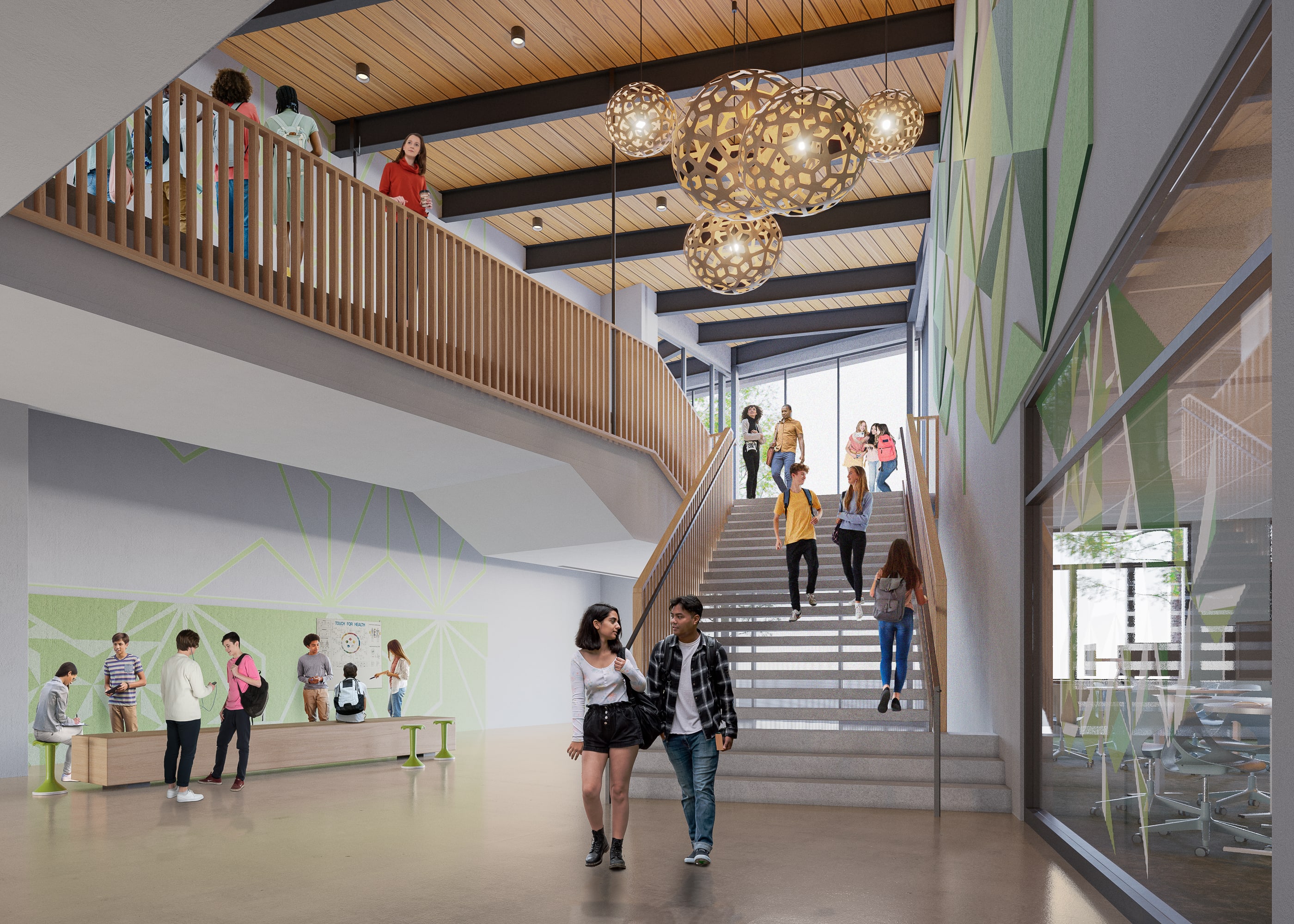
Through weekly engagement sessions with LOMS students, augmented by all-student and District-wide community surveys, BRIC's design team gathered insights that directly shaped the building. A particular emphasis on providing students with opportunities to get outside, socially at lunch and recess, and at passing times throughout the day, traces back to specific student feedback. Illustrating these direct connections between student input and design solutions through open house events helped the broader community understand and champion both student needs and the project's intent.
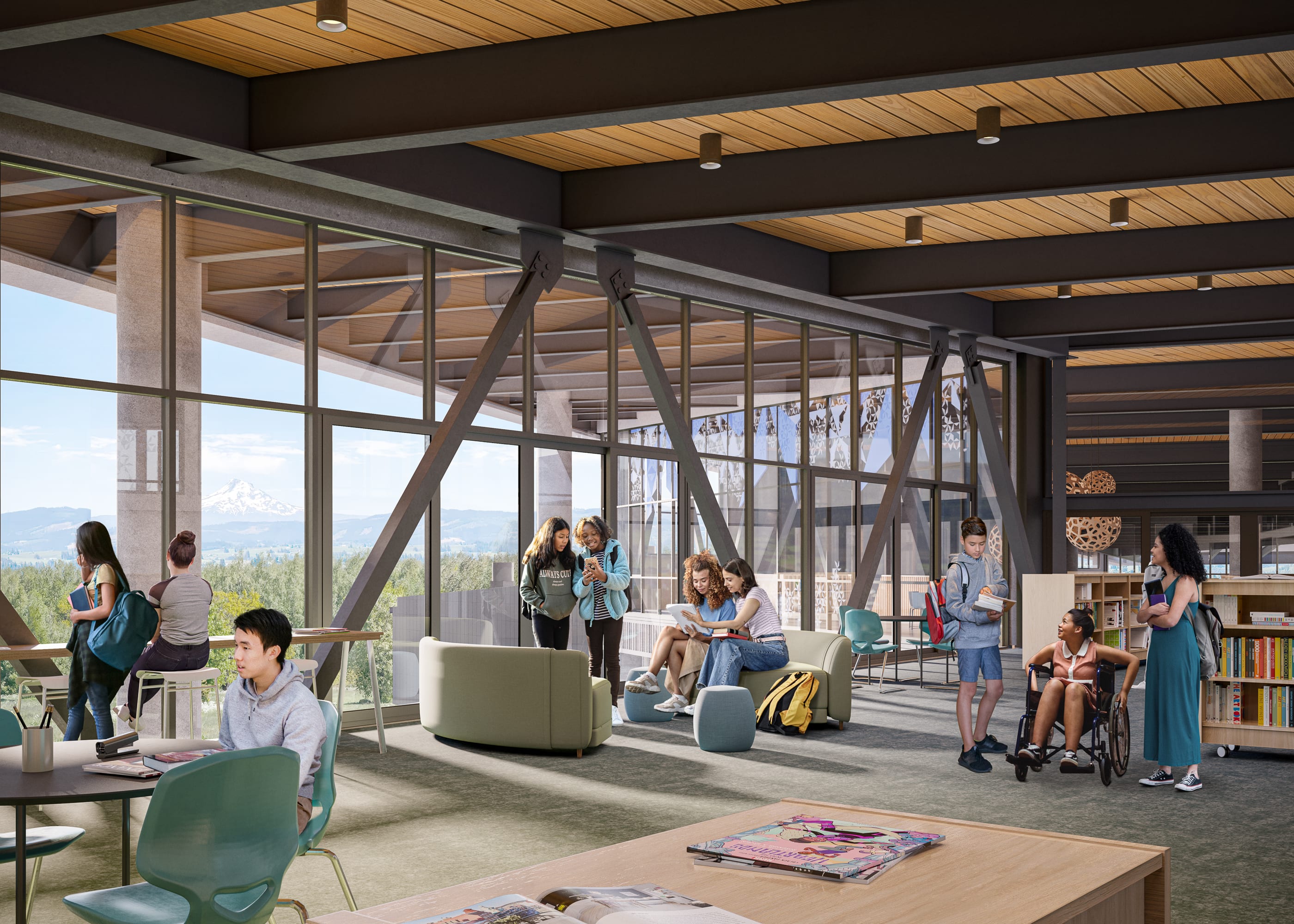
In partnership with District leaders, BRIC helped LOMS achieve Path to Net Zero certification and an EUI of 14 kBtu/sf/year, a benchmark for resiliency and energy efficiency among District facilities. From solar panels and daylighting to biophilic design and natural ventilation, every strategy—including stormwater management, an energy-efficient envelope, and high-performance building systems—works toward cultivating a building that performs responsibly over its lifespan.
